
Choosing salon management software is harder than comparing feature lists. Booking calendars, staff scheduling, products, and inventory control can look similar on a sales page but behave very differently in practice.
For more hands-on business tool comparisons, visit our AI Tools for Business hub.
I tested three salon management software platforms using the same fictional salon scenario: Booksy, Gendo, and Fresha. The tests focused on practical workflows rather than marketing claims.
Because not every core workflow involved generative AI, this salon management software comparison focuses on real operational automation and salon-management features instead of assuming that every platform is an AI tool.
The Short Verdict
⚙️ Best for: Fresha was the strongest overall fit for salons needing verified inventory tracking and basic appointment creation, while Booksy was useful for calendar visibility and availability suggestions.
🧩 Main limitation: Gendo’s documentation described product and inventory features that were not visible in the tested account, and Booksy’s single scheduling test did not confirm hard conflict prevention.
🏆 Overall verdict: Fresha produced the strongest result in this comparison. Booksy showed useful calendar guidance, while Gendo requires plan and account verification before a salon relies on it for product inventory.
Best inventory workflow: Fresha
Most revealing scheduling test: Booksy
Most important limitation: Gendo’s product and inventory features were described in documentation but were not available in the interface and account tested
Best overall result in this test: Fresha
There is no universal winner. The best salon management software depends on whether your priority is appointment scheduling, product inventory, or access to specific features in your plan.
How I Tested Salon Management Software
I created a fictional salon scenario and used fictional appointments, staff members, services, and products.
The tests were performed in English interfaces because many salon-management platforms serve international markets. I recorded what each platform actually displayed and did. I did not assume that a feature existed merely because it appeared in a help article or marketing page.
The main tests were:
Creating and managing salon appointments
Checking how the platform handled a scheduling conflict
Creating a product and tracking inventory
Completing a stocktake and checking the updated quantity
The results describe this specific hands-on test. They should not be treated as a guarantee that every account, country, or subscription plan will behave identically.
Booksy
Booksy was tested primarily as an appointment-management platform.
I created a fictional salon with three services: Haircut, Hair coloring, and Manicure. I also added fictional team members and created several appointments on the same day.
The Scheduling Conflict Test
To test how Booksy handled overlapping appointments, I attempted to move a manicure appointment to 10:30–11:25 while the same team member already had another appointment scheduled from 10:00–10:45.
Booksy did not simply allow the overlapping appointment to be saved without information. Instead, it displayed an alternative available time of 10:45 AM and suggested staff availability.
However, it also did not completely block the conflicting time during this test. That distinction matters.
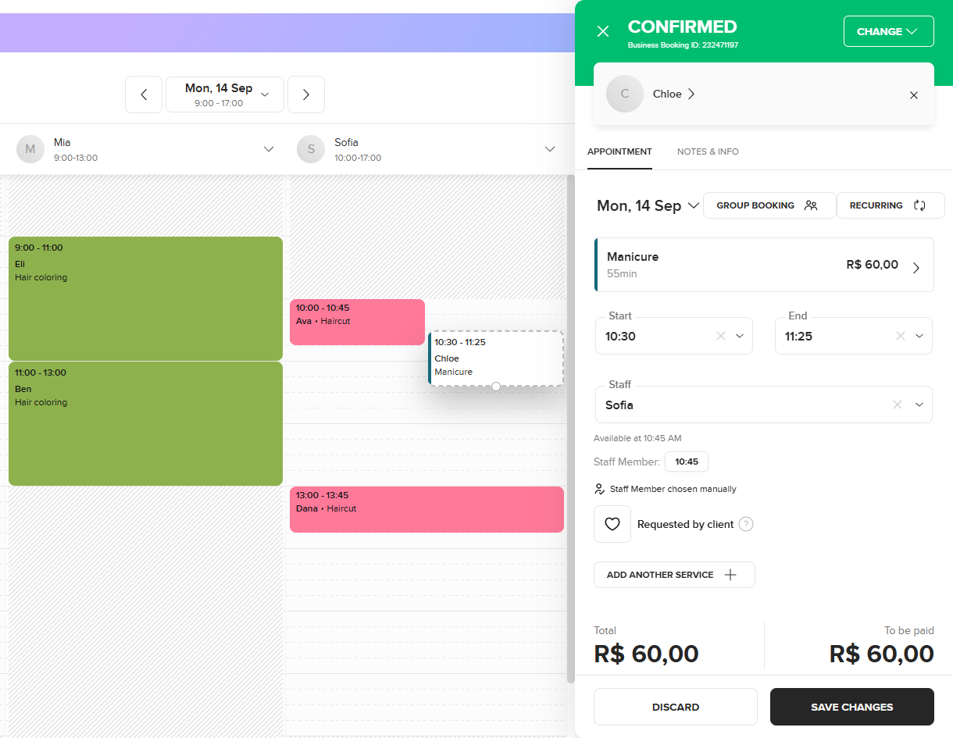
Booksy suggested an available appointment time during the scheduling-conflict test.
What Worked Well
Booksy made the staff calendar and appointment schedule easy to inspect. The suggested alternative time was useful because it showed the next available option instead of leaving the user to calculate the schedule manually.
What Needs Attention
A salon should verify whether Booksy’s conflict behavior matches its own scheduling policies. A suggestion is not the same as a hard scheduling restriction.
Booksy Verdict
Booksy performed well as a visual scheduling tool and provided helpful availability guidance. However, based on this single test, I would not describe it as a complete conflict-prevention system without further testing.
Gendo
Gendo presented a different result in this salon management software test.
The official Gendo documentation includes information about product listings and stock control:
Gendo product listing documentation
Gendo stock-control documentation
However, in the account and interface tested, the Catalog area displayed only Services and Packages. The Products section was not available in the visible Catalog interface.
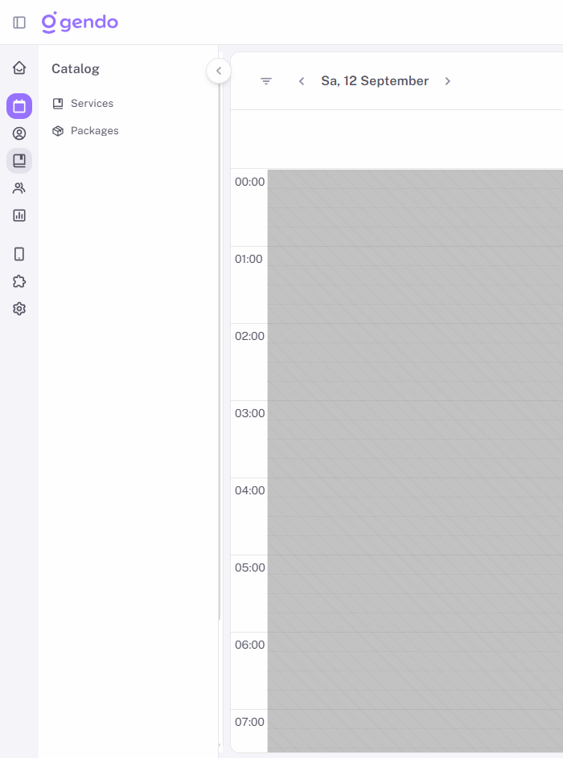
In the tested Gendo interface, Catalog exposed Services and Packages but not a visible Products option.
Why This Limitation Matters
There is an important difference between documentation and availability.
A help article may describe a feature that is available only in a specific plan, account configuration, region, rollout, or interface version. Therefore, a salon should confirm that product and inventory management are actually enabled before choosing Gendo for stock control.
This was not enough evidence to conclude that Gendo never offers product management. It only proves that the feature was not available in the account and interface tested.
Gendo Verdict
Gendo’s documentation suggests that product and inventory workflows exist somewhere in its ecosystem, but the tested account did not expose those tools. That access limitation is itself an important real-world finding.
Fresha
Fresha provided the most complete operational test.
Product and Inventory Setup
I created one fictional product:
Product: Hydrating Shampoo
Size: 500 ml
Supply price: R$25
Retail price: R$50
Initial stock: 10 units
Low-stock level: 3 units
Reorder quantity: 10 units
The product appeared in the Products area with a retail price of R$50 and an initial quantity of 10 units.
Stocktake Test
I then created an initial stock count and entered an actual counted quantity of 8 units.
Fresha displayed:
Expected: 10
Counted: 8
Difference: −2
Cost difference: −R$50
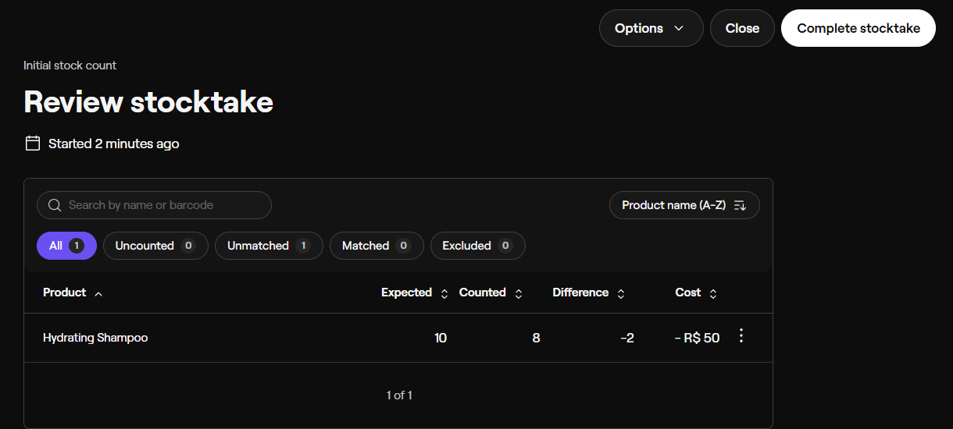
Fresha recorded 10 expected units, 8 counted units, and a difference of −2 during the stocktake.
After completing the stocktake, the product list showed the updated quantity of 8 units while keeping the retail price at R$50.
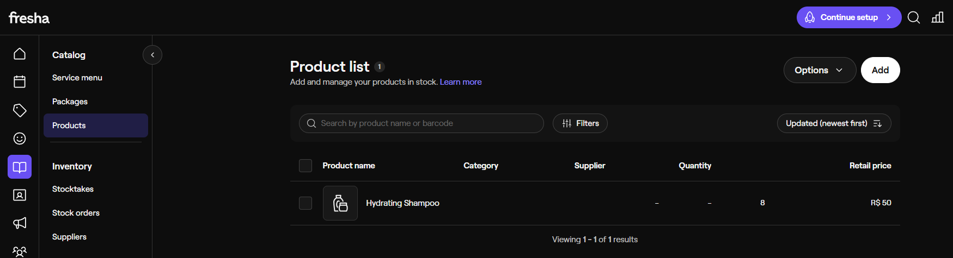
Fresha updated the Hydrating Shampoo inventory to 8 units after the stocktake.
Appointment Test
I also created a new appointment using the Haircut service:
Service: Haircut
Duration: 45 minutes
Price: R$40
Client type: Walk-in
Time: 12:30–13:15
I left the team-member selection as “Any team member.” Fresha automatically assigned the appointment to Wendy Smith (Demo), and the calendar displayed the appointment after creation.
The interface also confirmed the action with the message “Appointment created.”
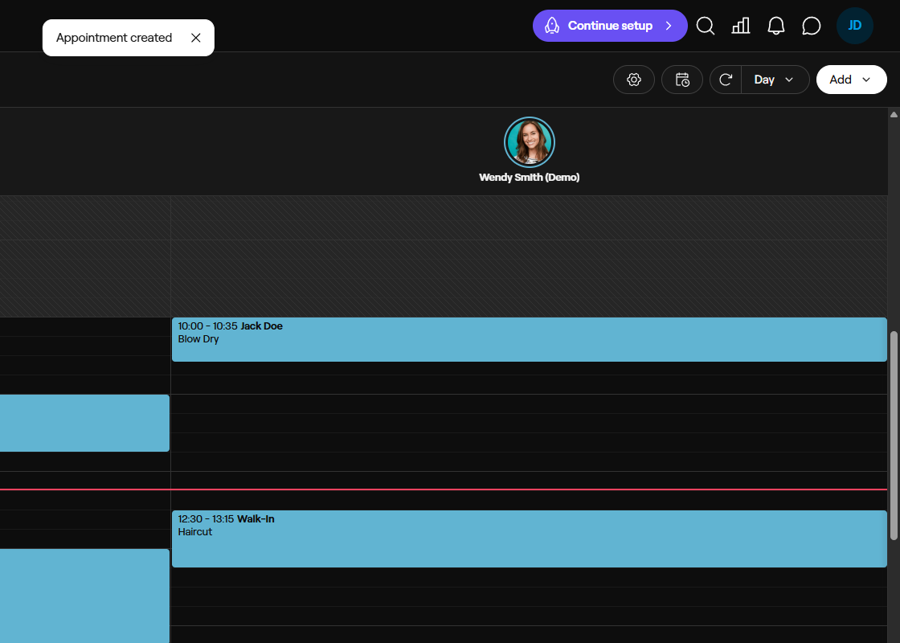
Fresha displayed the newly created walk-in haircut appointment on the calendar.
What Worked Well
Fresha connected the product, stocktake, and calendar workflows in a straightforward way. The inventory difference was clearly displayed, and the final product list reflected the new quantity.
The appointment process was also quick. A salon can select a service, leave the client empty for a walk-in, allow the system to choose a team member, and create the appointment.
Fresha Verdict
Fresha produced the strongest result in this comparison because both inventory tracking and appointment creation were successfully verified in the same account.
Comparison of Observed Results
| Platform | Appointment | Conflict behavior | Inventory | Limitation observed |
| Booksy | Completed | Suggested an alternative time but did not completely block the tested conflict | Not tested | Hard conflict prevention was not confirmed |
| Gendo | Not evaluated | Not evaluated | Not completed | Products were not visible in the tested interface |
| Fresha | Completed | Automatically assigned a team member when Any team member was selected | Completed successfully | The test used a fictional walk-in appointment and one product |
Are These Really AI Tools
This test does not prove that all three platforms provide generative AI features.
The verified workflows were mainly operational: calendar scheduling, availability guidance, product creation, stocktake tracking, and automatic team-member assignment.
That distinction is important. A platform can use automation without offering a chatbot, generative assistant, or AI-powered business analysis. For salon owners, the practical question is often not whether a platform uses the word AI, but whether it reduces manual work and provides reliable operational information.
Final Verdict
Fresha was the strongest performer in this specific hands-on comparison. It successfully handled both the inventory test and the appointment-creation test. The stocktake workflow was especially clear because it showed the expected quantity, counted quantity, difference, and cost impact.
For salons comparing salon management software, these results provide a practical starting point rather than a universal ranking.
Booksy was useful for calendar management and showed an alternative available time during the conflict test. However, the test did not confirm that it would prevent every overlapping appointment automatically.
Gendo revealed the most important limitation: the official documentation described product and stock-control features, but those features were not accessible in the account and interface tested.
My practical conclusion is:
Choose Fresha if inventory tracking and basic appointment creation are important priorities.
Consider Booksy if calendar visibility and availability suggestions are central to your workflow, but verify its conflict rules.
Confirm Gendo’s plan and feature access before relying on it for product inventory.
These results come from a limited hands-on test with fictional data. They are useful for identifying practical differences, but they do not replace checking current pricing, plan restrictions, support quality, payment features, or local availability before making a purchase decision.
Official Resources
Booksy for Business: official website
Gendo: official website
Gendo product listing: official help article
Gendo stock control: official help article
Fresha for Business: official website
Frequently Asked Questions
Are all of these salon management products really AI tools?
Not necessarily. The comparison includes practical salon-management capabilities, and a product can still be useful even when automation is more prominent than generative AI.
Which tool was the strongest fit in the observed comparison?
Fresha was the strongest overall fit for the tested salon workflow, but the best choice can change with booking needs, staff size, payments, reporting, and budget.
What should a salon verify before switching software?
Check booking, reminders, payments, reporting, fees, customer data export, integrations, support, and the exact features included in your plan.
Can salon software replace the human side of the business?
No. It can reduce administrative work, but service quality, client relationships, and business judgment still depend on people.
Leave a Reply